
GST is a landmark reform considering the sweeping changes it brings about in the indirect tax regime in India.
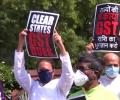
Dissenting states including Chhattisgarh and Kerala, have made it clear they are in no mood to relent. They want the Centre to borrow the entire Rs 2.35 trillion this fiscal citing bleak fiscal position.

The central government wants to impose the levy; many states are opposed - at least, to the Centre doing so

Rama Krishna Sangu, partner, Manohar Chowdhry & Associates, Chartered Accountants, and a member of the Indirect Tax Committee of ICAI, fielded readers' questions on GST on Rediff Chat.

The aim of the exercise was to further simplify GST forms and make the filing process more user-friendly, the finance ministry said in a tweet, reports Dilasha Seth.
Businesses with monthly turnover of over Rs 50 lakh will have to mandatorily pay at least 1 per cent of their GST liability in cash, the finance ministry said as it moved to curb evasion by fake invoicing. The Central Board of Indirect Taxes and Customs (CBIC) has introduced Rule 86B in Goods and Services Tax (GST) rules which restricts use of input tax credit (ITC) for discharging GST liability to 99 per cent. "... The registered person shall not use the amount available in electronic credit ledger to discharge his liability towards output tax in excess of 99 per cent of tax liability, in cases where the value of taxable supply ... in a month exceeds Rs 50 lakh," the CBIC said.
A well-functioning GST will enhance tax compliance and boost growth: IMF
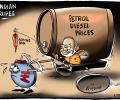
5 commodities namely crude oil, natural gas, petrol, diesel, and aviation turbine fuel (ATF) were kept out of GST's purview given the revenue dependence of state governments on these sectors.

As cess levied under GST isn't shared by states, most states oppose it on the ground that it would set a wrong precedent and distort the GST structure.

As many as 30 sub-groups and committees worked tirelessly to devise rules and laws as well as fix tax rates for over 1,200 goods and services.
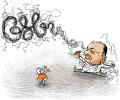
The window for registration is open up to September 30

The National Anti-Profiteering Authority has ordered FMCG major Nestle to deposit Rs 73.15 crore with Consumer Welfare Fund for not passing GST rate reduction benefit to consumers. Refuting the charges, Nestle said the benefits largely have been passed on by way of reduction of MRP or by way of increase in grammage.

GST will now apply to mutual funds, loan instalments and credit card dues.

It shows that states would require a compensation to the tune of at least Rs 1.67 trillion in 2024-25, as none of them would be able to achieve a 14 per cent growth every year.

Dr Nagesh Kumar, one of the three new MPC members, wanted the MPC to reduce the repo rate by 25 basis points to 6.25%.

The revised structure will help to keep airfares down, when airlines already face a triple challenge of rising crude oil prices, rupee depreciation and constrained airport capacity.
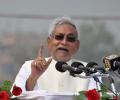
Bihar became the first non-NDA state and overall second after the BJP-ruled Assam to pass GST bill.

It will reduce compliance cost as the assessee will not have to maintain multiple records for a variety of taxes

Consensus seems a problem before the current session of Parliament ends.

High cost of acquisition due to a variety of reasons, including higher GST than all other major countries, is slowing down car demand in the country and unless the Centre and states take steps to reduce it, the industry is unlikely to experience reasonable growth, according to Maruti Suzuki India Chairman R C Bhargava. Addressing shareholders in the company's Annual Report for 2020-21, he said after the devastating second wave of the coronavirus pandemic hitting the first quarter of FY22, the performance in the next three quarters will largely depend on how effectively people get vaccinated and observe safety protocols.

The government has sacked these officers ranging from the ranks of principal commissioner to assistant commissioner, some of whom were already under suspension.

While Union Finance Minister Nirmala Sitharaman reiterated her stand that the central government was committed to cooperative federalism, finance ministers of non-BJP ruled states such as Punjab and Kerala said she refused to give a categorical assurance that states will be paid compensation on time.

With 7 per cent economic growth, India is not creating enough jobs as reflected by the number of applicants for vacant posts in some states, Reserve Bank's former governor Raghuram Rajan said and suggested the government needs to focus on promoting labour-intensive industries to generate employment. Rajan further said some Indians, especially those at upper level, are comfortable and have high incomes, but consumption growth from the lower half of the country has still not recovered to pre-pandemic level.

The Centre has borrowed and transferred Rs 6,000 crore as the first tranche of GST compensation shortfall to 16 states and two union territories, including Maharashtra, Gujarat, Bihar, Assam, Delhi and J&K, the finance ministry said on Friday. Last week, the Centre gave in to the demands of opposition-ruled states to borrow and fund the GST compensation shortfall.
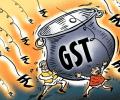
Central Board of Indirect Taxes and Customs said despite the electronic way or E-way bill mechanism there has been rampant evasion and there is a need to increase compliance.

This is the third consecutive month when GST mop-up remained below the Rs 1 lakh crore mark, despite the festival season.

A minimum levy of 12 per cent GST on tea will increase the cost, which will ultimately be passed on to consumers.
The ambiguity arose after notices were sent to lenders for non-payment of service tax under the pre-GST regime

The CBEC will itself be rechristened as the Central Board of Indirect Taxes and Customs and will supervise GST and Customs activities and provide the government policy inputs.
With less than five months left for the report of the Fifteenth Finance Commission to be submitted, its chairman N K Singh said the report will have fiscal road map for states, depending on their current situation.

The liquidity in the banking system moved into surplus almost after three months as the Reserve Bank of India (RBI) absorbed over Rs 40,000 crore from the market on Monday, predominantly on the back of increased government spending. However, this situation may be short-lived given the higher demand for funds to pay taxes and year-end targets, treasury executives said. Meanwhile, two variable reverse repo rate (VRRR) auctions held on Tuesday received weak response.

The largest challenge for the gigantic exercise between the Centre and the 29 states was to keep the latter interested over the years.

The Central government will borrow up to Rs 1.1 lakh crore on behalf of the states to bridge the shortfall in GST collections, the finance ministry said on Thursday. A slowdown in the economy since last fiscal has resulted in a drop in the Goods and Services Tax (GST) collections, upsetting the budgets of states which had given up their right to levy local taxes such as sales tax or VAT when GST was introduced in July 2017. To make up for the shortfall, borrowing from the market was proposed.

A final call will be taken by Congress president Sonia Gandhi on Thursday.
Certain technical problems are being faced by the taxpayers as a result annual return for the period July 1, 2017 to March 31, 2018 could not be furnished.

Experts said this will mean that companies, which have offices in multiple states, will have to raise Goods and Services Tax invoice for functions performed by employees in head office that has helped branches in other states.
The net indirect tax collection in 2020-21 grew 12.3 per cent annually to Rs 10.71 lakh crore, thereby exceeding the target set in revised estimates, the Finance Ministry said on Tuesday. The mop-up through indirect taxes, which include GST, Customs and excise duties, was Rs 9.54 lakh crore in 2019-20. In the Revised Estimates (RE) for 2020-21, the target was set at Rs 9.89 lakh crore. Net collections from Goods and Services Tax (GST) stood at Rs 5.48 lakh crore during 2020-21, an eight per cent drop compared to Rs 5.99 lakh crore in the previous fiscal year.

The Rajya Sabha on Wednesday took up the four bills related to the GST, with the Opposition urging the government to insulate taxpayers from harassment and questioning how the new regime was "ideal" when 40 per cent of the revenue base of the GDP was kept out of its purview.

GST rate for petrol and diesel cars and hybrid vehicles is already at the highest bracket of 28 per cent plus cess.

Traversing from being just vehicle manufacturers to mobility solutions providers amid a raging debate over which eco-friendly technology must be incentivised, the Indian automobile industry is driving in the new year under the shadow of a slowdown in sales with the post-pandemic pent-up demand in distant memory. The shift in the auto industry -- where advanced technologies like autonomous driving, vehicle intelligence, connected features and electrification are quickly gaining traction -- will be reflected in the upcoming Bharat Mobility Global Expo in which India's flagship Auto Expo has been clubbed to be held from January 17-22, 2025 in Delhi-NCR.
